What is Cart Abandonment?
What is Cart Abandonment and How Can You Improve It?
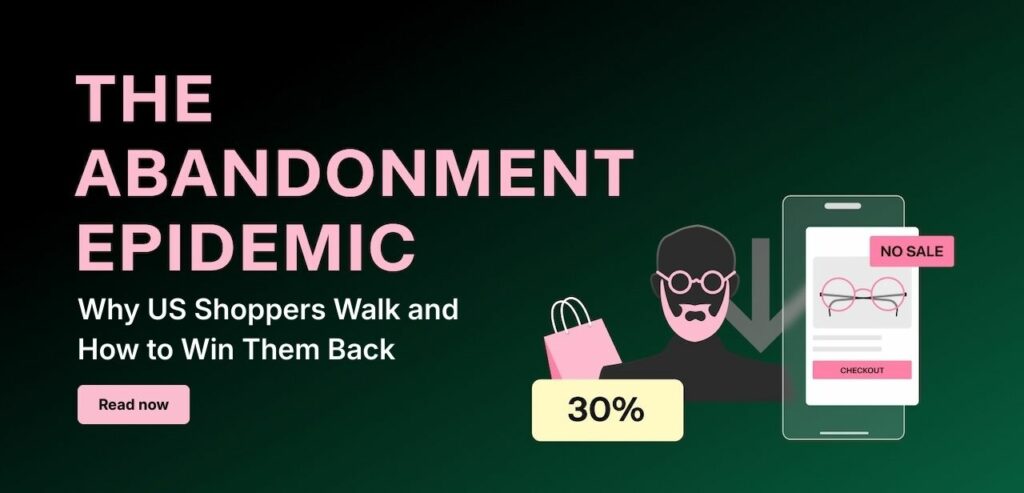
In eCommerce, cart abandonment is defined as when a customer adds items to their online shopping cart but leaves the website or app without completing the purchase. It is usually measured as a percentage of all shopping carts created that do not result in a successful transaction.
Where in the checkout process do most customers abandon their carts?
Most customers abandon their carts toward the final steps of checkout, especially at points where friction, surprises, or trust concerns arise.
- Shipping and Payment Stage: Drop-offs are highest when unexpected costs like shipping, taxes, or fees appear, or when payment options are limited or not trusted.
- Form-Filling & Account Creation: Lengthy checkout forms, required registrations, or complicated data entry often push shoppers away.
- Security & Trust Concerns: If the checkout doesn’t feel secure (e.g., no SSL, missing trust badges), many customers abandon at the payment confirmation step.
How does personalization and trust-building influence cart abandonment rates?
Personalization and trust-building both play a critical role in reducing cart abandonment rates because they address two of the main reasons shoppers hesitate: relevance and security.
Impact of Personalization:
When customers see tailored product recommendations, dynamic cart reminders, and personalized offers (e.g., discounts on items they viewed or left behind), they are more likely to complete their purchase. Personalization also simplifies checkout by pre-filling information for returning customers, making the process faster and less frustrating. This reduces friction and increases the sense that the shopping journey is designed around their needs.
Impact of Trust-Building:
Trust is especially crucial at checkout, where shoppers enter sensitive information. Secure payment options (SSL, PCI compliance, digital wallets) reassure customers that their data is protected. In addition, visible social proof like product reviews, ratings, or trust badges, reduces uncertainty about product quality and builds confidence in the purchase decision. The combination of security and credibility directly lowers the likelihood of abandonment at the payment stage.
Where are recovery strategies most effective?
Recovery strategies like emails, push notifications, and retargeting ads are most effective right after a cart is abandoned, ideally within the first 24 hours, when purchase intent is still fresh.
- Emails work well for reminding customers of the exact items left behind, especially if paired with incentives like discounts or free shipping.
- Push notifications are powerful on mobile apps or browsers, delivering instant reminders that can bring customers back quickly.
- Retargeting ads are effective across social media and display networks, keeping products top-of-mind and nudging shoppers who are still browsing elsewhere.
Looking for the real reasons shoppers abandon their carts?
Get the full report to uncover what’s killing conversions in 2025 — and how enterprise retailers can fix it.