
Key Takeaways
- DACH shoppers show growing curiosity toward AI in fashion but remain hesitant regarding autonomous purchases.
- Marketplaces dominate the start of the shopping journey, making multi-marketplace strategies essential for brands seeking visibility and growth.
- AI-powered digital try-ons and 3D experiences are emerging as solutions to reduce returns and increase purchase confidence.
In 2026, eCommerce in the DACH region is continuing to shape up strongly despite ongoing economic uncertainties. In Germany, growth is predicted to near the 4% mark in 2026, while Austria recorded a whopping 14% increase in eCommerce spending in 2025 – and fashion remains one of the most popular categories to shop for.
Here are five DACH fashion retail trends enterprise brands should amplify in 2026.
1. AI attracts curious shoppers – despite persisting trust issues
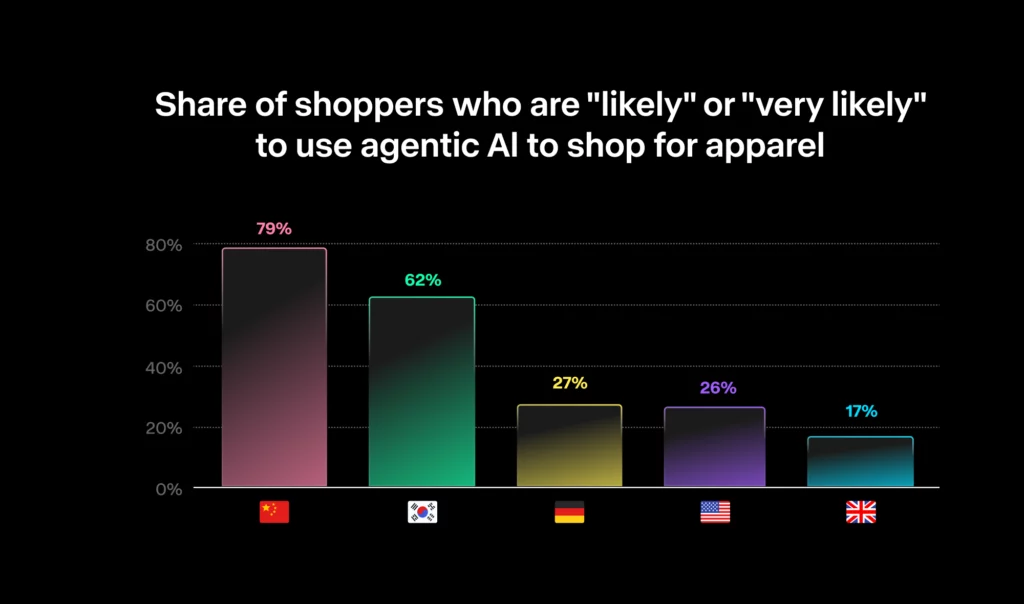
With AI on the way to transforming the way we shop, Gartner predicts that AI agents are going to replace 20% of interactions in the buying journey by 2028. And more than a quarter (27%) of German shoppers are open to giving AI agents a try. However, AI adoption has been slow compared to other parts of the world. In Asia, for example, 79% of our survey respondents would already be willing to hit buy via AI.
Reasons so many consumers in this region are yet to warm up to the idea of an AI executing purchases on their behalf include concerns over losing control of their spendings (50%), over self-expression or creativity (45%), and giving away their personal data (38%). 39% also believe that an AI agent wouldn’t be able to grasp their individual style preferences.
Want to learn more about the promise AI holds for fashion retail in 2026? Download our new guide.
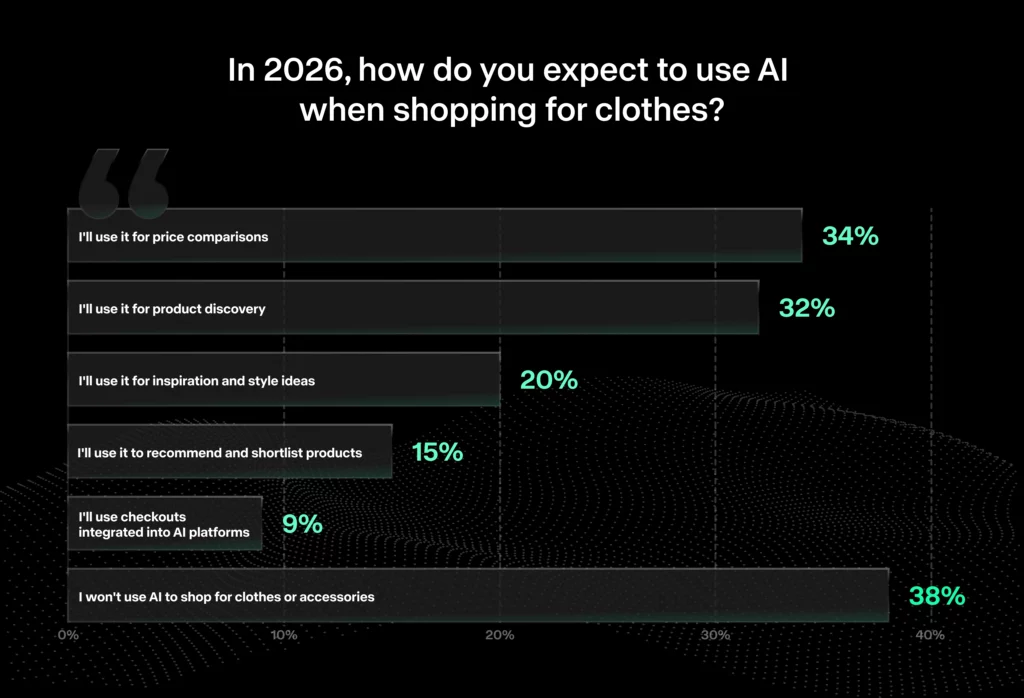
However, when it comes to supporting the discovery phase of their fashion shopping journey, many Germans are game. For example, when it comes to price comparisons (34%), product discovery (32%), looking for style inspiration (20%), and receiving product recommendations (15%). 9% even support the idea of an AI integrated checkout to make their shopping journey more efficient.
Fashion retailers willing to aid customers in transitioning AI from a research layer to a transaction layer in 2026, will only be one of the first-movers in what will be a new era of retail, but find themselves among the eCom tastemakers of tomorrow.
2. Fashion retail becomes digital first
When it comes to shopping online, shoppers in the DACH region are extremely well-versed. The vast majority (80%) of shoppers in Germany, Austria and Switzerland, use the web to hit buy at least once a month. For many of these consumers, interacting with retail brands online has become the normal way of life. The same counts for shoppers in Austria and Switzerland.
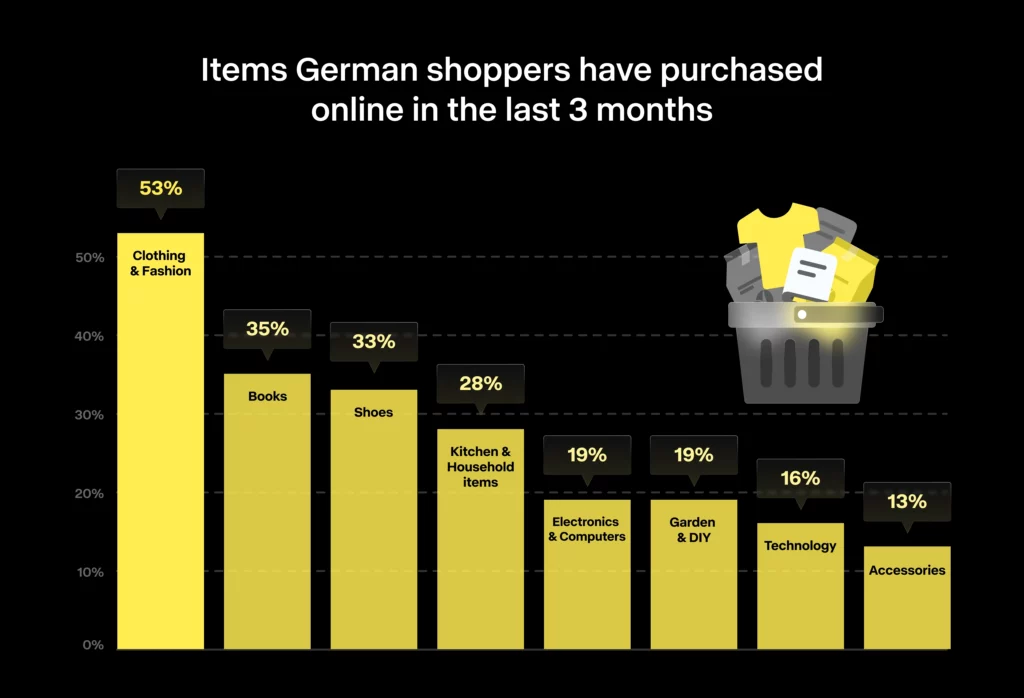
Their favorite thing to shop online: fashion. According to our latest survey, more than half of online purchases (53%) fall into the apparel category – far ahead of other items, like books (35%) or electronics (19%). For fashion retailers, this means digital fluency and a sound eCommerce strategy are more important than ever.
With in-store shopping also being prominent in these regions, what it needs is a digital boost to keep pace with modern expectations. The brands that master omnichannel shopping experiences will be the ones that win in 2026. For example, by:
- Optimizing your cross-channel path to purchase, that empowers shoppers to seamlessly switch between devices and access your services both online and in physical stores.
- Offering payment options they trust. After all, one in five shoppers is ready to abandon their carts on the spot if their favorite payment method isn’t available.
Ready to find out which strategies enterprise retailers need to win in fashion retail in 2026? Download our new guide.
3. Multi-marketplace exposure trumps your home turf
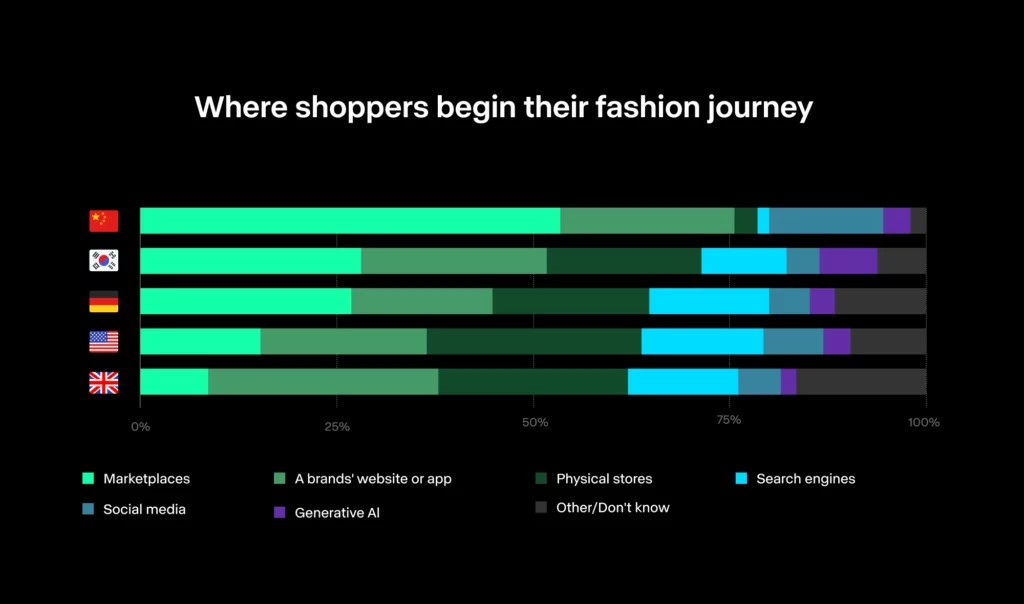
Always keen to chase the best Preisleistungsverhältnis (en.: price-value-proposition), it’s hardly surprising that most DACH region shoppers begin their shopping journey where they can find the greatest product varieties: on marketplaces. In Germany alone, that accounts for 27% of consumers. Here, online marketplaces grew by nearly 5% in 2024 while the rest of the global market averaged out at around 1%.
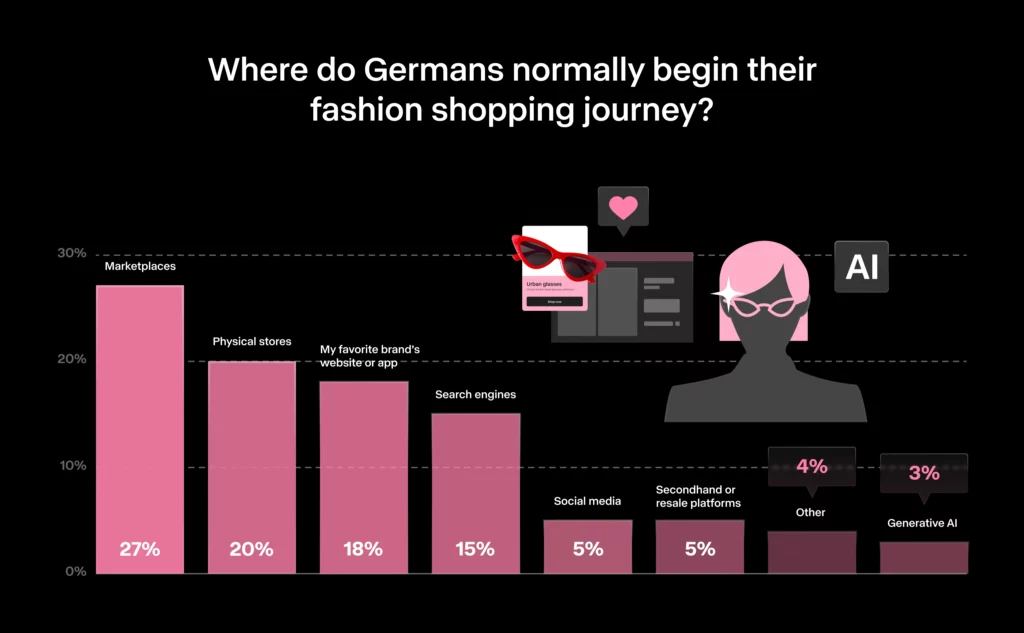
For enterprise retailers looking to thrive in this region, 2026 is a year to prioritise diversification. One marketplace alone won’t cut it – but showing up on multiple third-party sites will help boost visibility and reach tenfold – and, ultimately, stimulate business growth.
Marketplaces give brands direct access to new audiences – and the tools to engage with them meaningfully. Popular ones, like Zalando and ABOUT YOU, let you go beyond optimizing your listings with high-quality product images, engaging description, and target keywords – and let you create own-brand stores on their platform. Here, audiences can explore curated items that match their interest.
For example, Calvin Klein’s ABOUT YOU storefront features campaign images with celebrity and influencer collaborators, creating a clear, visually engaging connection with younger audiences.
And if Germans love marketplaces – why not become one? Turning your own shopfront into a marketplace to feature other brands translates to more traffic on your page, brand exposure, and home-turf conversions.
4. Digital try-ons remove purchase barriers and decrease returns
While fashion is one of the most frequently purchased categories, it also has the highest hit-and-miss ratio when ordering online. According to the EHI Retail Institute, shoppers return 26-50% of fashion-related purchases in Germany. Digital try-on technology has been aiming to mitigate this issue, but up until now, it’s been lacking the je ne sais quoi to go mainstream.
But now AI has provided the breakthrough retail needed to make this technology commercial viability. It enables visual-first, hyper-personalized AR and 3D experiences that can enhance every single detail of your product, from fit to fabric textures.
Zara, for example, debuted a new AI-powered try-on feature that quickly had both fashion editors and customers globally wowed: It generates live-action avatars of shoppers after uploading just a few snaps of themselves. As a result, they can instantly see themselves wearing the brand’s clothes, eliminating any of the guesswork that usually comes with online shopping.
Zalando too has been at the forefront of tapping into this new age of AI-powered AR try-ons. The online fashion retailer has been rolling out 3D product views and a virtual fitting room feature. On top of reducing size-related returns by up to 40%, it’s differentiating features like these that give audiences a reason to come back and engage with your brand beyond the LLM shift.
While a big chunk of German shoppers (41%) are yet to encounter digital try-ons on their shopping feeds, 37% believe that AR and 3D imaging would increase the likelihood of them completing a purchase.
5. Emotional commerce feeds ‘little treat culture’
‘Little treat culture’, as globally amplified by the example of Labubu dolls in 2025, has been deeply rooted in German and Austrian culture for decades – if not centuries. Whether it’s the first scoop of ice cream in the early spring sun or a Kaffee und Kuchen (en: coffee and cake) date, Germans love a comforting, inexpensive small treat. And this deeply ingrained culture easily translates from cake to fashion commerce.
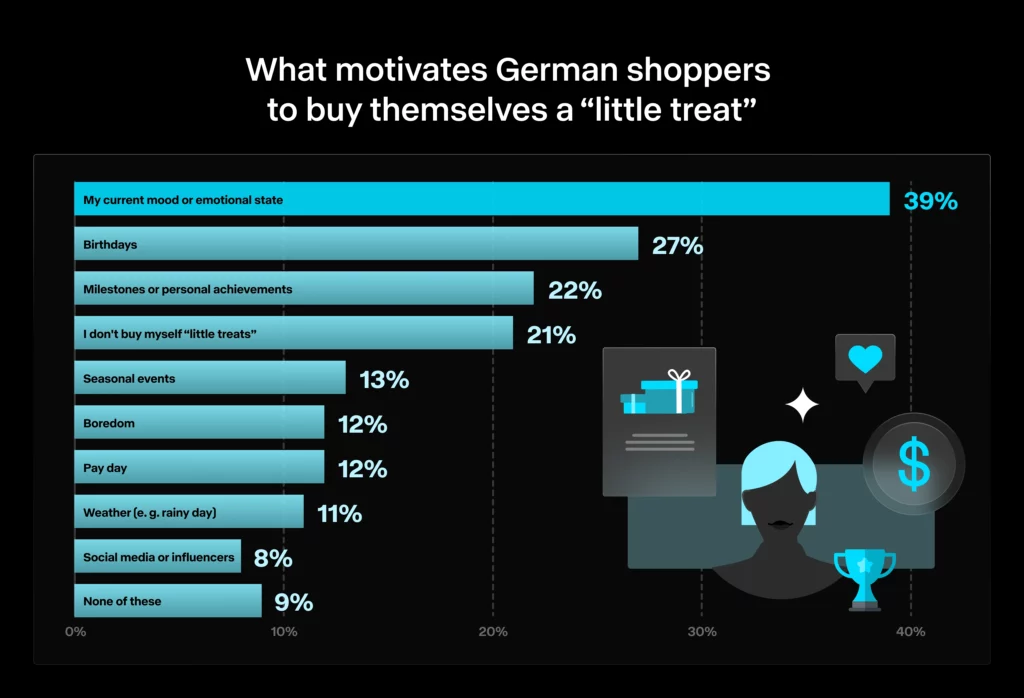
With the economic uncertainty, largely driven by inflation, continuing to be front of mind for these consumers, emotion- and value-driven purchases that spark instant joy will likely continue to be on the rise. So fashion retailers that know what small indulgences make their customers tick in 2026 will be ahead of the pack – and able to win these regions’ favor fast.
However, there are a few little-treat triggers to keep in mind: When choosing ‘little treats’, 42% of German shoppers look out for affordability, not luxury and 31% are after instant gratification. Over a quarter (27%), on the other hand, want everyday items that feel special, while 21% are after something self-care oriented. Whichever way you lean, timing and impeccable logistics are non-negotiable for retailers looking to meet these needs.
How does DACH compare to the rest of the world?
While shoppers in the DACH region love marketplaces – in the UK they’re heading straight to their favorite brand’s online stores. And Americans, they’re bucking the online trend and stepping into brick-and-mortor shops.
Want to see how German apparel shoppers differ on the big trends of 2026? Get your free copy of Fashion Retail 2026: Strategies for Winning in a World of AI, Algorithms, and Tariffs.