In 2026, good prices and fast delivery won’t be enough for consumers. They’re looking for shopping experiences that feel deeply personal. Brands need to adapt quickly, rethink how they build loyalty, and embrace the tech reshaping personalization in enterprise fashion.
So, what are the fashion eCommerce trends that will move your brand forward in 2026? We’ve highlighted the four most critical trends redefining the future of fashion retail. The brands that lean into them today will be the ones leading tomorrow.
1. The Rise of Agentic AI
AI has already transformed how fashion brands advertise, personalize, and operate. But 2026 marks the rise of something even more powerful – agentic AI.
Unlike traditional generative AI tools that simply suggest or create, agentic AI can understand a shopper’s intent and act on it. In fashion, it will behave like a personal shopper, interpreting needs, narrowing options, comparing products, and even building carts automatically.
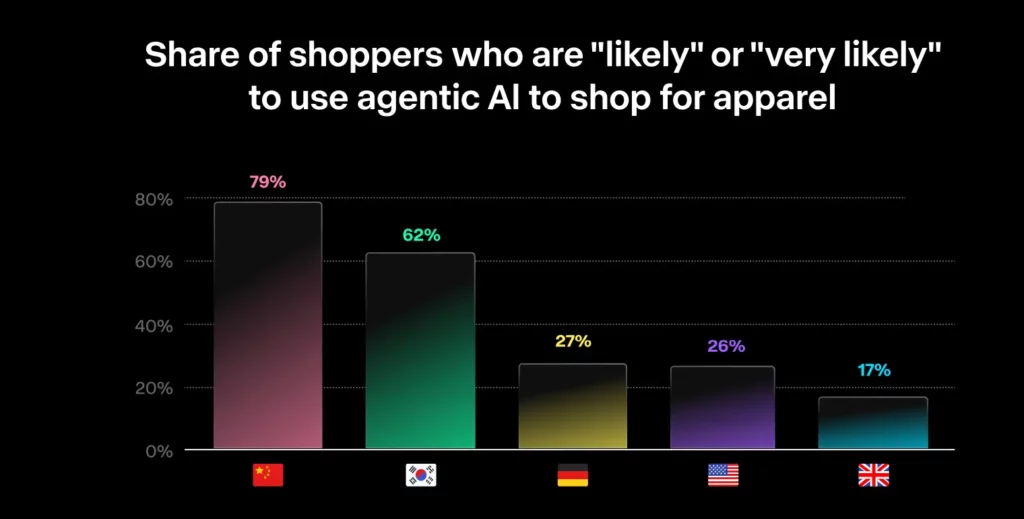
For customers, agentic systems remove the hassle of browsing and filtering products. Instead of searching for “party dresses,” they can ask for “a dress for a winter wedding next weekend under $200,” and the agent handles the rest. The experience is faster and feels more intuitive and tailored to real shopper needs.
And for retailers, agentic AI will accelerate product discovery, improve conversions, and personalize journeys at a level that manual merchandising can’t match. It opens new opportunities through agentic systems, like Daydream, the platform that has already introduced over 200 brands to its platform to help them reach high-intent shoppers.
Agentic AI is still in its early stages – but its impact will be significant. The fashion retailers who begin testing it now will be the ones shaping the trend in 2026.
Want more global consumer data on trends diving 2026? Get the insights in the guide, Fashion Retail 2026: Strategies for Winning in a World of AI, Algorithms, and Tariffs.
2. The Evolution of Fashion Discovery
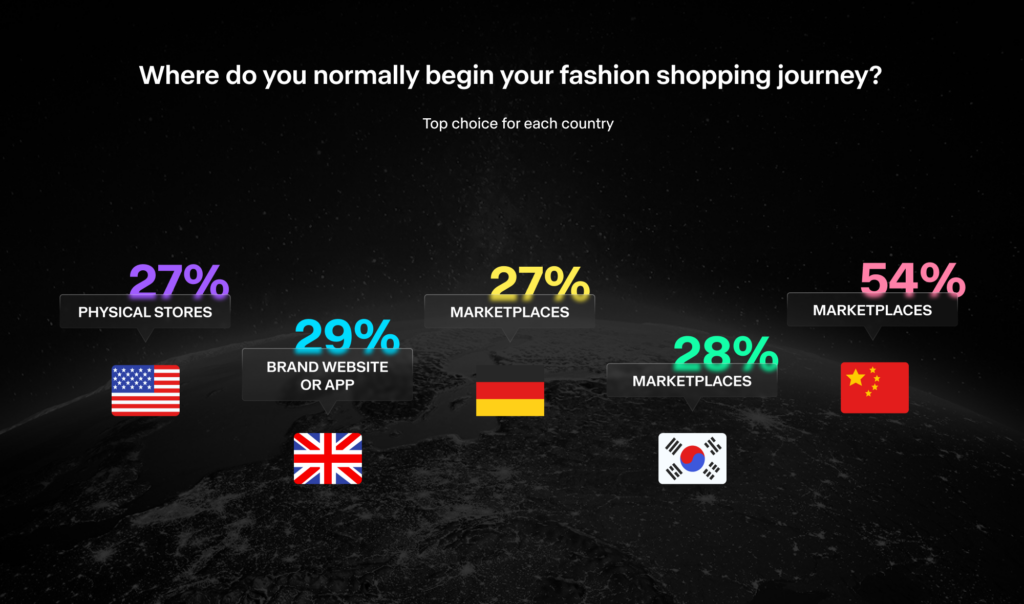
In 2026, fashion retailers won’t just be competing against each other – they’ll be competing for attention. Today’s shoppers are discovering brands across many channels. Globally, 27% start their shopping journey on online marketplaces, followed closely by brands’ websites or apps (23%).
Social media may be a less common starting point (7%), but it still is a valuable part of the shopping journey – 26% of shoppers say they purchased from TikTok Shop in 2025 alone.
However, these global averages differ vastly by market, age, and gender – making creating a one-size-fits all strategy impossible for international retailers and brands. You have to be visible and shoppable everywhere your customers are. Because these platforms aren’t just the start of the shopping journey – they’re defining fashion trends.
Social platforms like TikTok are culture drivers. Microtrends, short-lived, viral fashion moments that influence what consumers buy and where they shop, were born on TikTok. From niche trends like “quiet luxury” to more viral ones like the “clean girl aesthetic,” TikTok brings these trends to the mainstream seemingly overnight.
These microtrends feed back into marketplaces, social feeds, and brands’ websites, shaping the multi-channel discovery journey. Even in markets where fewer than 20% of shoppers start their journeys on social media, these viral moments still influence purchase decisions.
AI is adding another layer to discovery. While only a small share of fashion shoppers currently start with generative AI (4%), its adoption is growing fast. Brands preparing with GEO (generative engine optimization) strategies will appear in AI-driven search results and ensure they stay visible as more shoppers turn to AI when shopping for clothes.
For enterprise retailers, success in 2026 means being present wherever shoppers are. The brands with the strongest strategies for cross-channel visibility will be the ones to secure lasting engagement and sales.
3. Visual Commerce: Bringing Products to Life
Shoppers today need more than a flat product image. They need to understand how something really looks and feels before they buy it. Gen Z and Gen Alpha shoppers have grown up watching dynamic, expressive content. How well your brand delivers real-feel visuals will determine whether a shopper clicks ‘buy’ or scrolls past.
Visual commerce transforms product pages into richer, more informative experiences. Short videos, rotating 3D views, and AR try-ons give shoppers a clearer sense of movement, texture, and color – long before an item arrives at their door.
And with apparel return rates hovering around 26%, the best retailers are creating more visually engaging experiences to protect margins.
Visual commerce benefits both retailers and shoppers by:
- Improving confidence in purchases
- Creating a stronger brand presence with unique, recognizable visuals
- Decreasing return rates
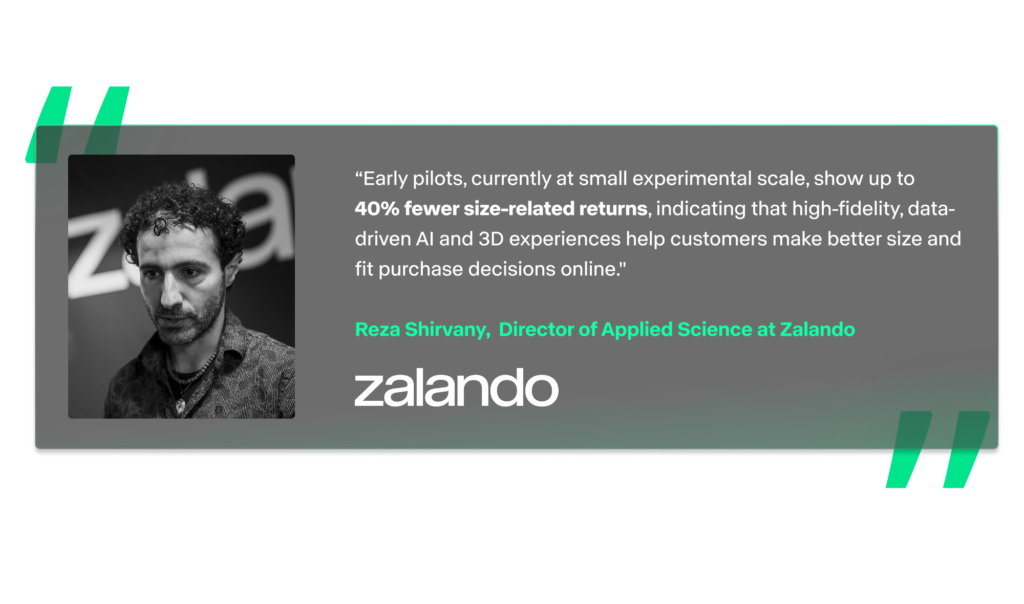
This technology was spearheaded by Zalando – Europe’s largest fashion marketplace. Its early pilots saw massive results.
In 2026, a static image won’t be enough information for your customers. The brands that treat imagery as an experience and focus on bringing products to life will be the strongest players in 2026.
4. Human-First Shopping
In 2026, it won’t be the brands with the smoothest checkouts or flashiest loyalty program to earn the most returning customers. It’ll be the brands that feel genuinely in tune with their customers.
Shoppers are increasingly turned off by the one-size-fits-all nature of online retail. In 2026, they want retailers to treat them like people – not profiles. A human-first approach starts with understanding context.
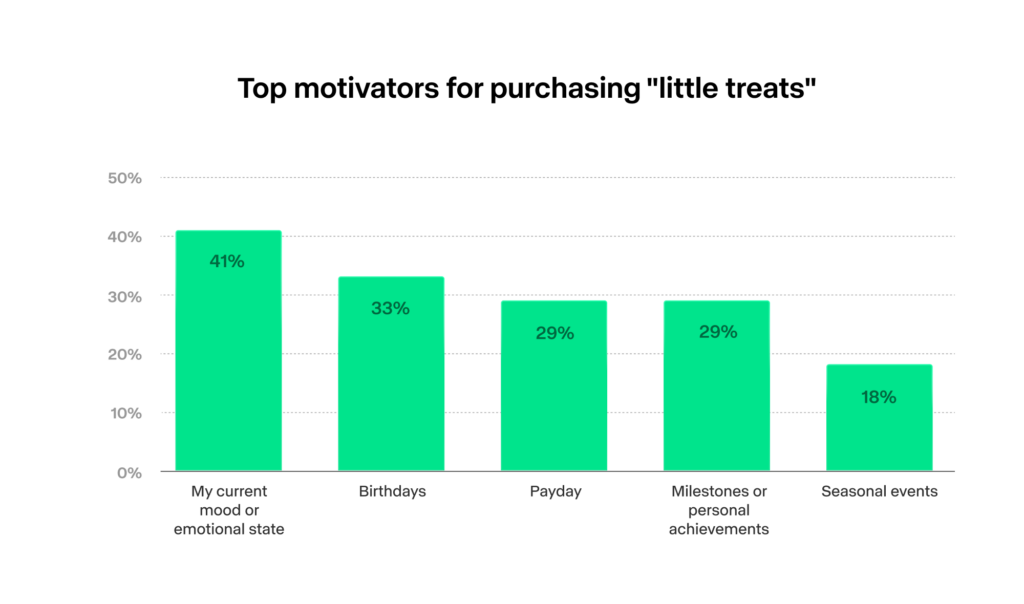
The small purchases that offer a mood-boost, mark a celebration, or even relieve stress are the moments that shape their lives. And as 41% of shoppers say their mood or emotional state motivates them to purchase themselves a “little treat,” recognizing and responding to these micro-moments is no longer optional.
In a tech-driven fashion market, AI is your tool for detecting customers’ behavior patterns. From payday treats to personal rewards, focusing on delivering product suggestions, emails, or promotions that feel aligned with customers’ lives will create the authentic connection they’re looking for.
When it comes to building long-term loyalty, exclusivity is becoming the ultimate differentiator. Nearly 1 in 5 shoppers say early access to promotions or limited drops is the perk they value most. Community-driven experiences, like localized events or curated pop-ups, amplify that feeling of belonging and turn loyal customers into brand advocates.
In 2026, fashion retail is about more than transactions – it’s about using the latest technology to reconnect with shoppers. Find out what trends your shoppers will be looking for – in every market. Download the guide Fashion Retail 2026: Strategies for Winning in a World of AI, Algorithms, and Tariffs.