What Is Quick Commerce?
Quick commerce, or Q-commerce, is a retail delivery model that fulfills online orders within 10-30 minutes, using a network of small, hyper-local “dark stores” instead of the centralized warehouses behind traditional eCommerce’s 1-7 day shipping windows. It is used mainly for high-frequency, time-sensitive goods – groceries, pharmacy items, snacks – and, increasingly, beauty, tech or even fashion products.
Quick Commerce vs. Traditional Commerce
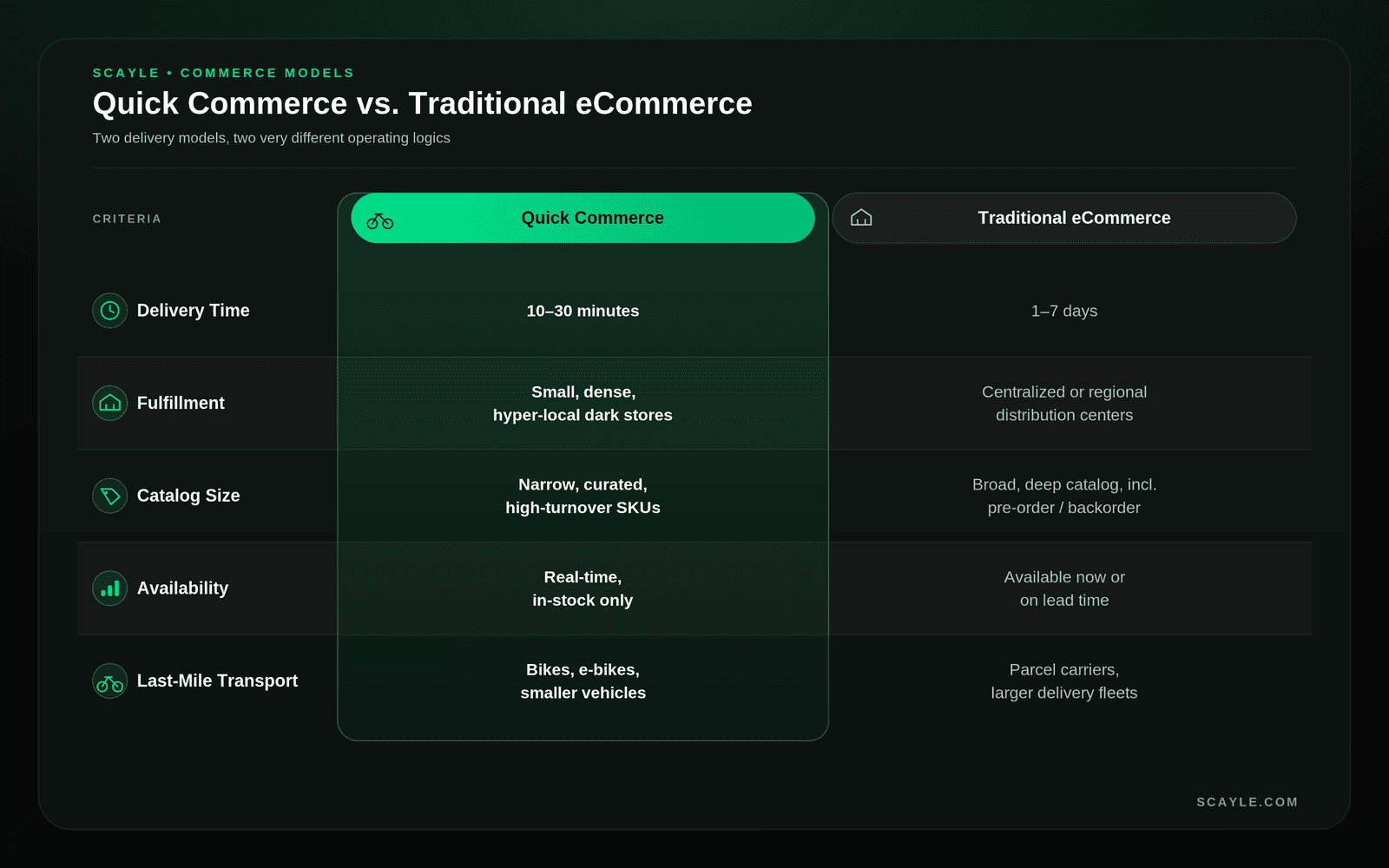
What does Quick Commerce require?
Running quick commerce at scale depends on several capabilities working together
- A digital storefront or platform that takes and routes orders instantly, with no friction between browse and checkout.
- Strategically placed dark stores – small, local fulfillment points that shrink the last mile.
- Real-time logistics – route optimization, live tracking, and delivery orchestration to hit minute-level SLAs.
- Coordinated staffing across pickers, riders, and support to sustain speed under peak demand.
- Demand-aware inventory planning to keep fast-moving SKUs in stock without over- committing capital to a narrow catalog
Who is quick commerce best suited for?
Quick commerce fits retailers and brands selling high-frequency, low-consideration goods in dense urban markets: grocery, pharmacy, and convenience are the clearest fits, with fashion, beauty, and electronics brands increasingly adopting it as a speed-based differentiator. Products need to be small, light, and shipping is time-sensitive. Businesses with rural-heavy customer bases, large basket sizes, or long consideration cycles typically see limited return on the investment.
What are the advantages and trade-offs of quick commerce?
Quick commerce gives merchants a clear differentiator: faster fulfillment drives repeat purchase, opens the door to impulse and top-up orders, and appeals to digitally native shoppers who treat instant delivery as a baseline, not a premium. It can also strengthen brand perception as modern and customer-first.
The trade-off is cost. Dense dark-store networks and last-mile logistics are expensive to run, which is why quick commerce margins are structurally thinner than standard eCommerce — and why it only makes sense for products with genuine urgency behind the purchase.
When should a business invest in a quick commerce strategy?
Quick commerce makes sense once three conditions align: high-frequency demand, sufficient urban density, and the fulfillment infrastructure to support last-mile delivery at scale. Investing before dark-store logistics, real-time inventory visibility, and a composable commerce backend are in place is the most common reason quick commerce initiatives stall.

Winning Fashion Retail in 2026: Navigating AI, Algorithms, and Tariffs
What you do in 2026 won’t just shape your next fiscal year—it will set your trajectory for the entire decade. In this high-stakes market, a weak strategy means getting left in the dust.