What is an E-tailer?
An E-tailer, short for “electronic retailer,” is a business that sells products or services to consumers primarily or exclusively over the internet, rather than through physical stores. E-tailers range from pure-play online retailers with no storefronts at all to “brick-and-click” businesses that pair physical locations with a full digital sales channel.
E-tailer vs. Traditional retailer
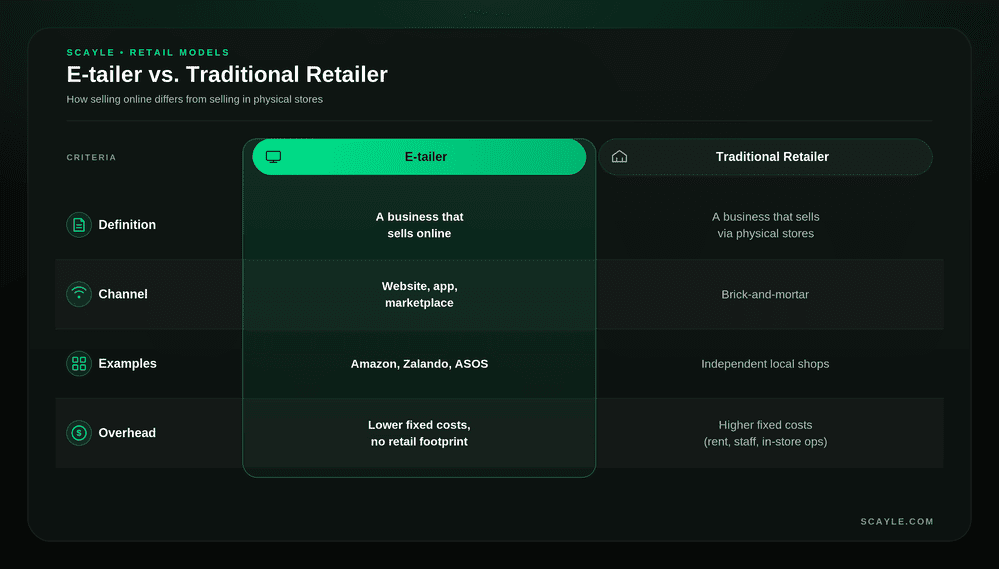
What are the types of E-tailers?
- Pure-play e-tailers operate exclusively online, with no physical retail presence — think Amazon, AliExpress, or dropshipping businesses. Their cost structure skips rent and in-store staffing entirely, which typically translates into more competitive pricing.
- Brick-and-click e-tailers combine physical stores with a digital storefront, using each channel to reinforce the other — click-and-collect, in-store returns for online orders, and unified loyalty programs are common examples. Most established retail brands now operate this way by default
What are the advantages and challenges of being an E-tailer?
Advantages:
- Lower overhead — no rent, fewer in-store staff, and lower fixed costs than physical retail
- Broader reach — a single storefront can serve customers across regions or countries without opening new locations
- Richer customer data — every interaction is trackable, enabling personalization and targeted marketing that physical retail can’t easily match
- Faster iteration — pricing, promotions, and merchandising can change instantly, without waiting on physical resets
Challenges:
- Intense price competition — lower overhead for everyone compresses margins across the board
- Logistics complexity — shipping, returns, and fulfillment become core operational functions, not afterthoughts
- Platform dependence — e-tailers who sell primarily through marketplaces like Amazon or Zalando cede pricing control, customer data, and brand experience to the platform
- Rising customer expectations — shoppers now expect the speed, personalization, and service quality set by the largest platforms, regardless of the retailer’s size
How can e-tailers compete with large platforms?
The e-tailers that scale successfully typically do two things at once: they use large marketplaces as an additional demand channel, while building their own direct-to-consumer presence on a platform they control. Relying solely on marketplace traffic leaves an e-tailer exposed to fee changes, algorithm shifts, and zero ownership of the customer relationship — which is why most growth-stage e-tailers eventually invest in owned, composable commerce infrastructure rather than renting all their shelf space from someone else.

How Lifestyle Brands Can Realize Direct-To-Consumer
Amazon and other big platforms keep growing, even in downturns, while individual brands often stall and take years to recover. That’s pushing brands to rethink their digital strategy