
Key Takeaways
- Context unlocks autonomy: Agentic AI can only act on its own when it understands how products, shoppers, and markets connect.
- Style signals beat demographics: Silhouettes, cuts, and fit reveal what shoppers actually wear—driving the 63% loyalty tied to personalization.
- Structured data protects margins: Real-time, API-accessible product and fit data can cut size-related returns by up to 40%.
- Brand rules prevent generic choices: Machine-readable guidelines stop AI from purely chasing conversion and keep decisions aligned with brand identity.
Fashion plays by its own rules, and 96% of the senior US fashion executives we surveyed agree. The industry is more complex than others: size, fit, style, and seasons all shift constantly. Agentic AI can act across all of them on its own – once it understands fashion context.
Fashion context means AI considers how products, customers, and markets relate to each other, instead of reading each signal in isolation. Five layers build that understanding.
1. The customer: style, fit, and shopping history
Age, location, and past orders tell an AI agent who the shopper is, but not what they’d wear. Because fashion is inherently personal and individual style signals are what fill that gap: the silhouettes a shopper opens, the fabrics they filter for, the brand whose cut fits them best.
Source: SCAYLE, Fashion Retail 2026: Global Shopper Survey Report
50% of fashion executives say understanding customer preferences, style, and intent is what sets AI in fashion apart from other retail industries. The payoff for getting it right is loyalty: 63% of shoppers stay loyal to brands that offer personalization. Those style signals then feed the ranking decisions that turn fashion merchandising into a growth engine.
2. The product: attributes and relationships
A product page tells a shopper what’s for sale. Product data tells an agent how that item behaves: its category, size, availability, and material.
Fashion multiplies that depth across sizes, colors, silhouettes, fabrics, fit, and how each item fits with the rest of the assortment. 28% of fashion leaders name complex assortments, and 36% name connecting product, customer, and inventory data as what makes applying AI in fashion so complex.
Structured attributes are what allow AI to read your catalog, and a tech stack prepared for agentic AI keeps them within reach: agents can pull attributes like size, material, and availability through APIs in real time, across every connected system. McKinsey’s State of Fashion 2026 names semantically rich, API-accessible product data as critical for brands that want AI models to find and favor their products.
Fit data pays off, too. Reza Shirvany, Director of Applied Science at Zalando, reports up to 40% fewer size-related returns with early pilots of data-driven AI and 3D experiences that help shoppers choose the right size.
Curious which fashion-specific factors enterprise leaders rank highest when they apply AI? See the data in the retailer survey report.
3. The brand: aesthetic, positioning, and strategy
Two retailers can stock similar pairs of jeans but still require opposite recommendations. A premium label protects its full-price positioning. A value brand leads with price. Each has its own aesthetic, tone, and merchandising rules.
Brand context is everything that defines how a retailer sells: the aesthetic and tone of voice, the price positioning, and the merchandising rules, such as which products earn the hero slot. Agents receive product data as structured guidelines and rules they can read and apply before every recommendation, not as a brand book in a PDF.
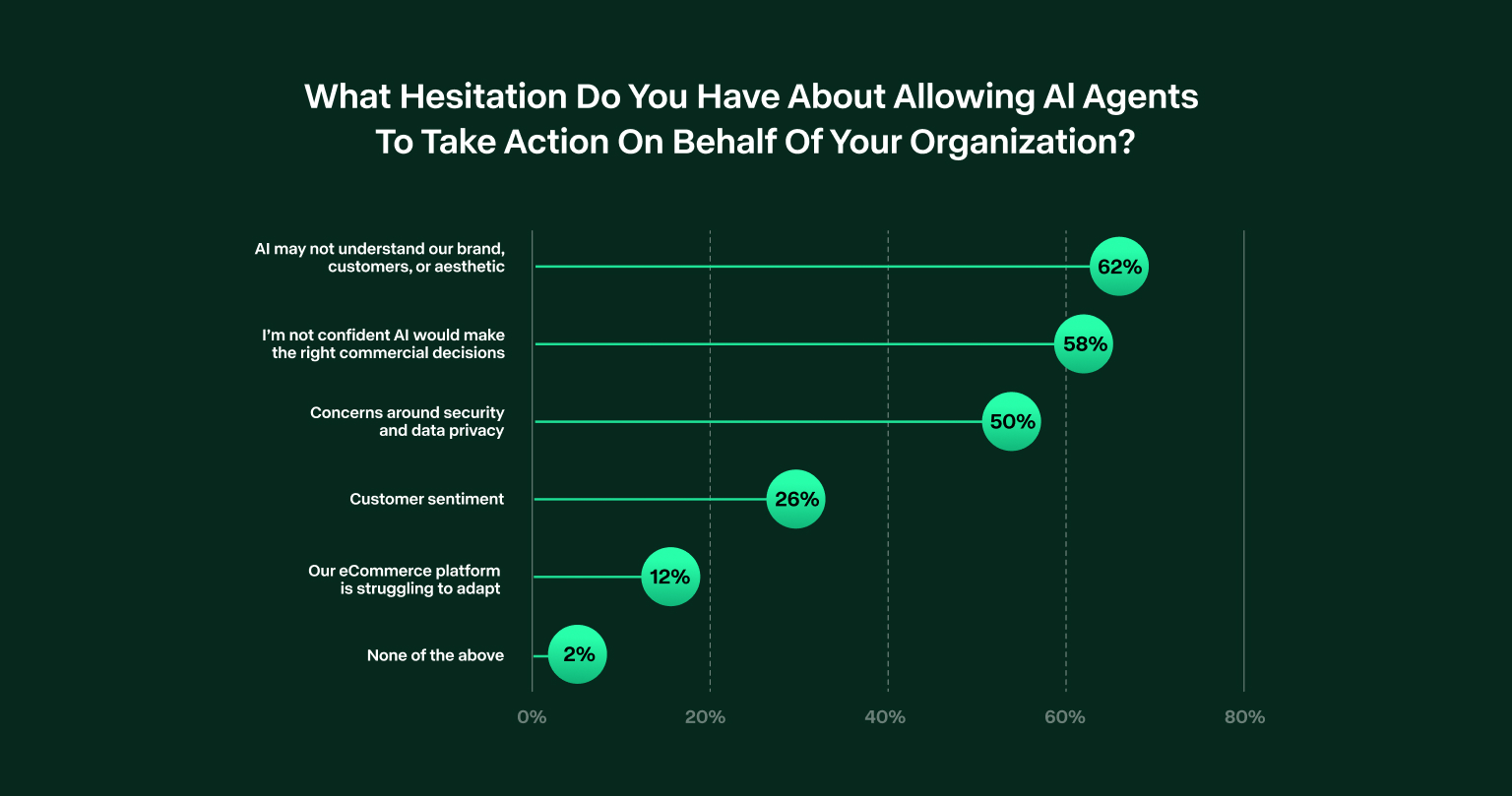
Agents that read sales data alone pick what converts best today. With brand context, they add a second filter: does this fit the brand? 48% of respondents name making decisions that align with brand and merchandising strategy as what sets AI in fashion apart, and 62% are concerned AI agents may not understand their brand, customers, or aesthetic well enough to act on their behalf. Brand context closes that gap, so recommendations reflect your brand’s voice alongside your bestsellers.
4. The market: customers, trends, and priorities by region
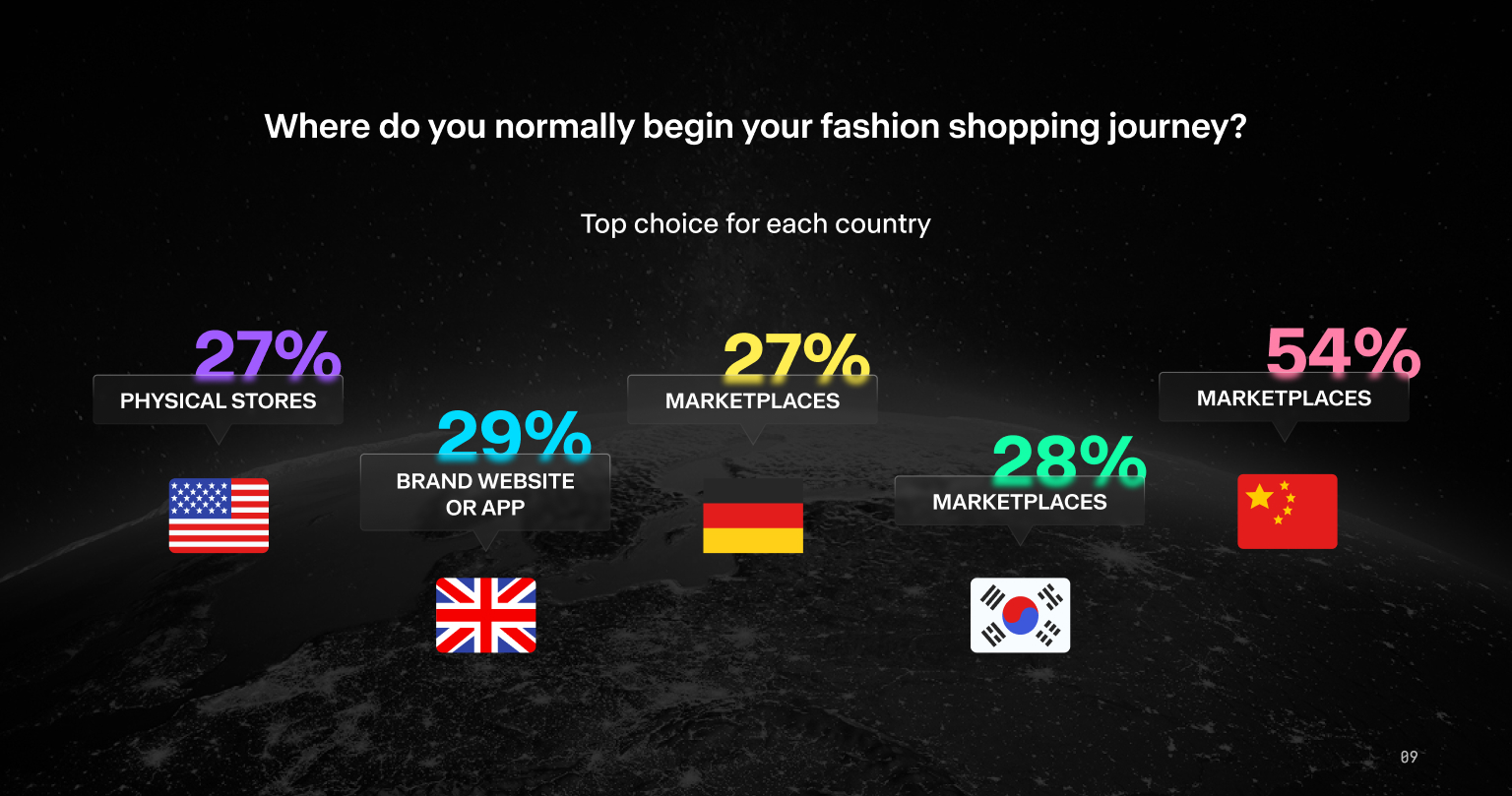
One brand’s shopping journey often looks different in every market. Globally, 27% of shoppers start their fashion journey on marketplaces and 23% on brand websites or apps. However, consumers’ starting points vary regionally.
Source: SCAYLE, 4 Fashion Industry Trends Taking Off in 2026
Attitudes toward AI vary, too. UK respondents are 10% to 15% less comfortable with AI in retail than respondents in other surveyed countries. An agent with market context adjusts what it shows, how it explains itself, and which commercial priorities it follows.
Want more data from the enterprise fashion retailer survey? Read the full report.
5. The moment: trends, sales, and stock
Fashion trends expire fast. A bestseller with only two sizes in stock shouldn’t hold the hero slot. A trend that peaks on social media this week needs immediate visibility. However, 76% of respondents have lost revenue opportunities because their technology couldn’t keep pace with fast-changing trends or customer expectations. Yet, the potential for AI’s impact is clear: 58% see more accurate demand forecasting as its biggest opportunity to improve margins.
The moment layer brings live signals into the picture: what’s trending, what’s selling, what’s in stock, and what needs to happen – right now. The brands that can operate on that agility will be the ones to win in the agentic era. Agents need fresh data to match that pace, and fresh data needs connected systems, which is why replatforming in fashion often comes first.
How the five layers work together
Each layer adds a signal. Together, they make a decision. Picture a UK shopper searching for a wedding guest dress. The agent knows her style and fit (customer), which dresses come in her size and pair with a jacket (product), which looks match the brand’s positioning (brand), how UK shoppers like to be guided (market), and what’s trending and in stock this week (moment). The result is the right product for the shopper that’s also right for your brand at that specific moment.
Which layer will you connect next?
Ask your team one question: where does each layer live today? If customer data sits in one system, product attributes in another, and stock levels in a third, your agents will struggle to piece together the necessary context.
Each layer you connect widens what they can do on their own. Fashion commerce rewards the retailers who connect all five first. Which one is next?
Ready to see how enterprise fashion leaders prepare for autonomous commerce? Download the report.